What Is a VTuber?
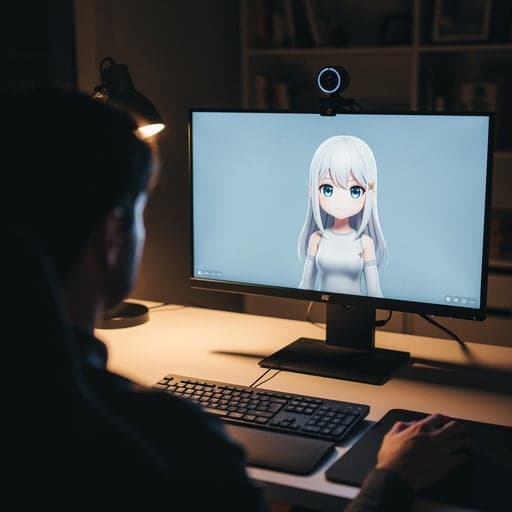
A VTuber is a streamer or video maker who appears as an animated character instead of on camera. Here's how the character follows a real person, the four kinds you'll see, and where the idea came from.
By Facecam team
Published · Updated · 5 min read

On this page
Short answer
A VTuber (short for virtual YouTuber) is a creator who streams or makes videos as an animated avatar instead of showing their face. Software watches the person through a webcam and moves the character to match their head, eyes and mouth, live. The person behind the avatar talks, plays and reacts as usual.
If you've seen a cartoon character chatting live over a game on Twitch or YouTube, you've seen a VTuber. There's a real person behind it, talking into a mic and sitting in front of a webcam. Viewers just see the character.
What does VTuber mean?
VTuber is short for virtual YouTuber. Wikipedia defines one as an online entertainer who uses a virtual avatar made with computer graphics. The name stuck even though VTubers now stream on Twitch, TikTok, Kick and everywhere else, and "VTubing" just means streaming as an avatar.
The person is usually anonymous. The character has its own name, look and personality, and fans talk about the character, not the person. Some VTubers keep the same character for years; others retire one and start fresh.
How does VTubing work?
Every VTuber setup has the same four parts, whether it costs nothing or thousands of dollars:
- 01
Camera
A webcam or phone camera watches your face.
In Facecam: Any webcam
- 02
Face tracking
Software finds your head turn, blinks and mouth, many times a second.
In Facecam: Runs in the browser tab
- 03
Avatar
A 2D, 3D or PNG character copies those movements.
In Facecam: VTuber Maker or PNGTuber Maker
- 04
Output
OBS or a video call shows the character instead of you.
In Facecam: OBS capture, or the extension in calls
The tracking step is the clever part. The software finds points on your face (the corners of your eyes and mouth, your nose, your jaw) many times a second, and turns them into numbers: how far your head is turned, how open your mouth is, whether you're blinking. The avatar is built with matching moving parts, so those numbers drive it directly. Nothing is animated by hand.

Better setups add more. An iPhone's face sensor tracks small expressions more precisely than a webcam. Some VTubers add hand tracking, or full-body tracking for 3D models. But a plain laptop webcam is enough to start.
What kinds of VTuber are there?

| Kind | The avatar | Moves with | Usual app |
|---|---|---|---|
| 2D VTuber | A layered drawing rigged in Live2D | Face tracking | VTube Studio |
| 3D VTuber | A 3D model, usually a VRM file | Face, sometimes hands or body | VSeeFace, Warudo, VNyan |
| PNGTuber | Two or more still pictures | Your microphone | PNGTuber apps |
| AI VTuber (AITuber) | Any of the above | An AI that writes and speaks the lines | Custom setups |
2D is the classic anime look. An artist draws the character in separate layers (each eye, eyelid, strand of hair) and a rigger sets up how each layer moves in Live2D Cubism. 3D models are usually VRM files, an open format for 3D avatars kept by the VRM Consortium in Japan. You can make one for free in VRoid Studio.
PNGTubers skip tracking entirely. Wikipedia describes them as VTubers who use sprites instead of a rigged model: one picture when you're quiet, another when you talk. It's the cheapest way in, and plenty of big streamers use it on purpose. AI VTubers are the newest kind: the character is voiced and written by an AI, sometimes with a person guiding it.
Where did VTubers come from?
- 2016: Kizuna AI's YouTube channel starts on 29 November. She was the first to call herself a "virtual YouTuber", and the term spread from there.
- 2017–2018: agencies form. Cover's Hololive debuts its first VTuber, Tokino Sora, in September 2017 and its first group in 2018. Nijisanji launches in 2018, built around Live2D models and live streaming.
- 2018: the number of active VTubers grows from about 2,000 to 4,000 between May and mid-July, according to Wikipedia's figures.
- 2020: more than 10,000 VTubers by January, and VTubing spreads well beyond Japan.
- Today: alongside the big agencies there are many independent VTubers, and plenty start with free tools.
What software do VTubers use?
| App | Avatar type | Runs on | Price |
|---|---|---|---|
| VTube Studio | 2D (Live2D) | Windows, macOS, iPhone, Android | Free; optional paid watermark removal |
| VSeeFace | 3D (VRM) | Windows | Free |
| Warudo | 3D (VRM) | Windows | Free for personal use |
| VNyan | 3D (VRM) | Windows | Free |
| OBS Studio | Shows any of them on stream | Windows, macOS, Linux | Free |
| Browser tools (like ours) | 3D (VRM) or PNG | Any computer with a browser | Free |
Desktop apps give you more control: better tracking with an iPhone, props, hotkeys, physics. Browser tools are the fastest way to try the idea, with nothing to install. You can always move to a desktop app once you know you like it.
Is a VTuber the same as a face filter or a face swap?
No, though all three change what the camera shows. A face filter adds something to your real face: ears, makeup, a blurred background. A VTuber replaces you with a drawn or 3D character, and the audience knows it's a character. A live face swap keeps your real head, hair and room but puts another realistic face on yours, so you can look like anyone you want in a call or stream. If you want to look like a different person rather than a cartoon, live face swap is the tool, not VTuber software.
What do VTuber words like debut and graduation mean?
- Model or rig: the avatar file and the setup that lets it move.
- Rigger: the artist who makes a model move, often not the same person who drew it.
- Debut: the first stream as a new character.
- Toggle: a hotkey that switches an outfit, prop or expression.
- Graduation: when a VTuber retires a character and stops streaming as it.
- Reincarnation: a creator coming back later as a new character.
How can you try being a VTuber today?
You don't need a model, an artist or any downloads to see what it feels like. Open our VTuber Maker, allow your webcam, and the sample avatar starts copying you in under a minute. Our step-by-step avatar guide covers getting your own character and putting it in OBS or a call.
Questions
Are VTubers real people?
Almost always. A real person talks and moves, and the avatar copies them. AI VTubers are the exception: an AI writes and voices the character.
Do VTubers only stream on YouTube?
No. The name started with YouTube, but VTubers stream on Twitch, TikTok, Kick and other sites too.
Why do people become VTubers?
Common reasons are privacy (your face stays off camera), playing a character, and not having to look camera-ready. Some people simply like the art.
How much does it cost to become a VTuber?
It can be free with a VRoid model or a PNGTuber and OBS. Custom Live2D or 3D models from artists usually cost hundreds of dollars or more.
What is a VTuber graduation?
The planned retirement of a VTuber character. The channel usually stops, and the person may come back later under a new name.
Keep reading
VTubing
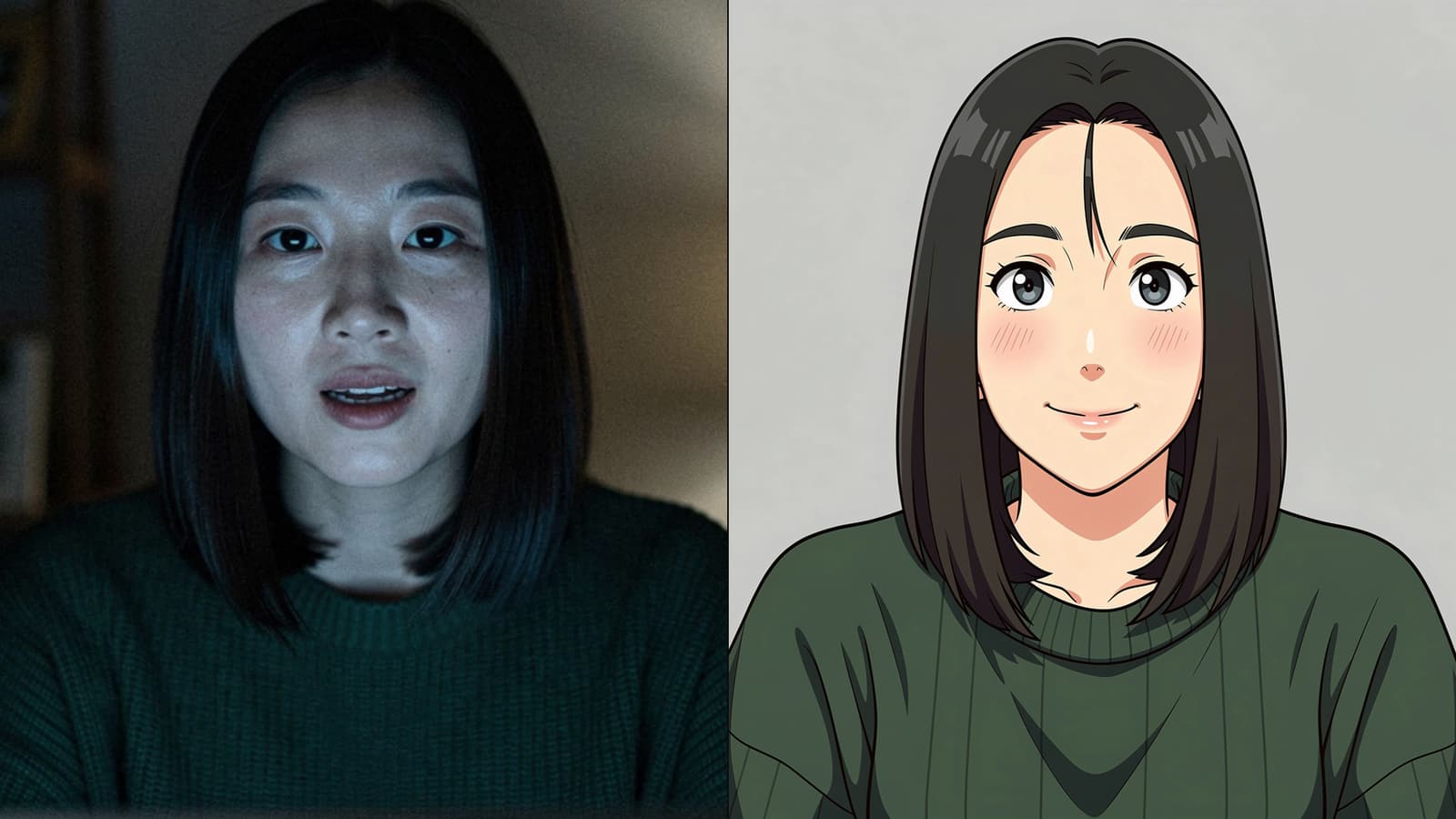
How to Turn a Photo Into a VTuber Avatar
You can turn a selfie into a cartoon avatar that opens its mouth when you talk, in about a minute. We ran our AI Avatar Maker on a good photo and a bad one to show what actually changes.
4 min read
VTubing
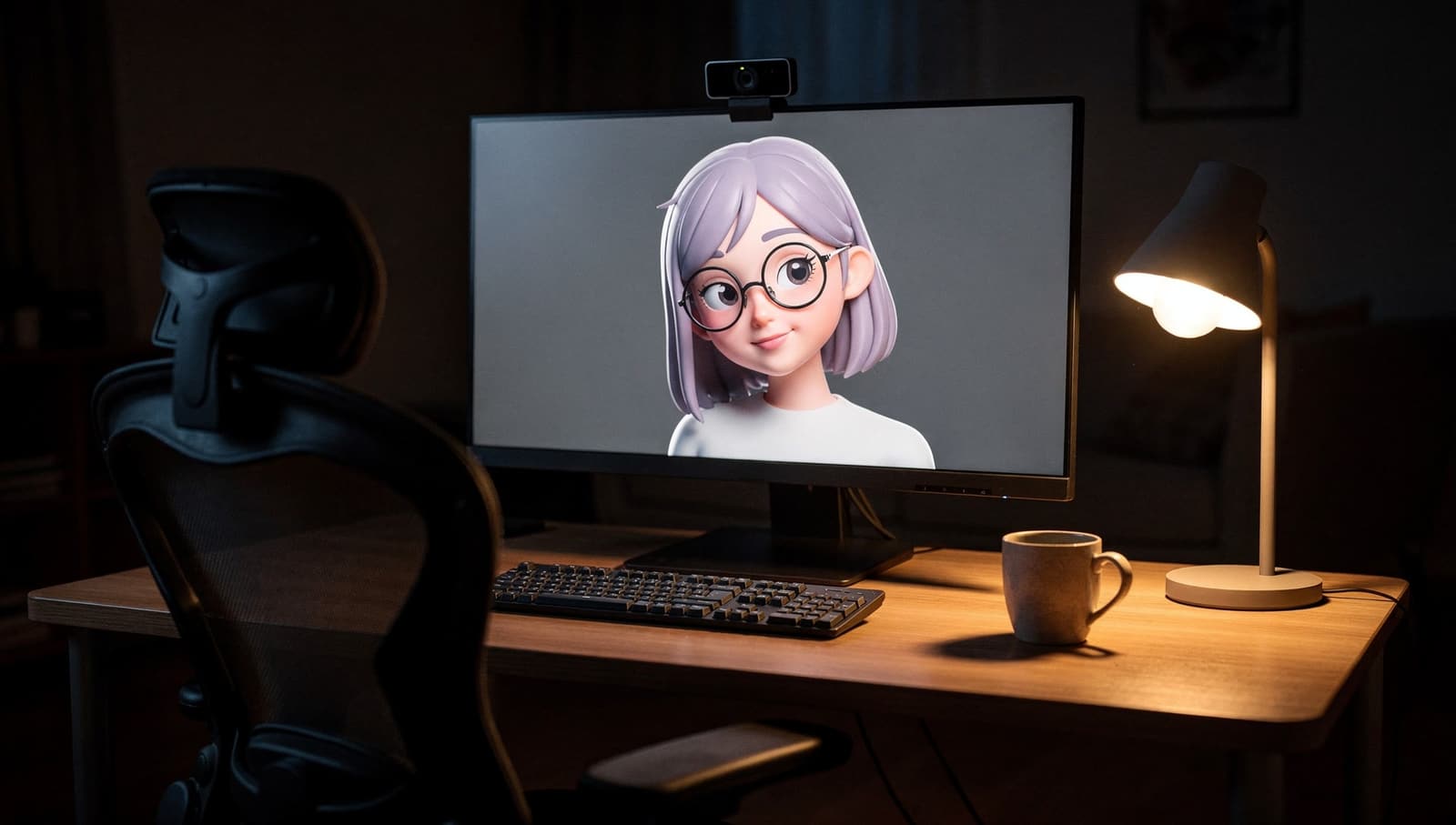
How to Make a VTuber Avatar for Free, With No Download
How to make a VTuber avatar in a browser tab: a 3D model that copies your face, or a 2D one that talks when you do. We timed the setup, and we say where a download is still needed.
7 min read
Voice
Is Voicemod Safe?
Is Voicemod safe to install? We read its privacy policy, help center and store listings so you don't have to: what it puts on your computer, what data it collects, and how to download it without risk.
6 min read


Free, in your browser
VTuber Maker
VTuber Maker is a free browser tool that moves an avatar with your webcam's face tracking and outputs it as a virtual camera in Chrome.
Open VTuber Maker