What Is a Deepfake?
What the word means, how a deepfake is made, and what one looks like up close.
By Facecam team · Updated
Short answer
A deepfake is media made with AI to show a person's face or voice where it never was. The most common kind is a face swap: an AI model draws one person's face onto another person in a picture or video, frame by frame. The word joins “deep learning”, the kind of AI that makes it, with “fake”, and dates from 2017, when a Reddit user called “deepfakes” shared face-swapped videos.
Step by step
Find the face
A detector finds the face in every frame and marks points on it: eyes, nose, mouth and jawline.
Read who it is
A second model turns the new face (from one photo, in today's tools) into a numeric description of who that person is, separate from their expression and pose.
Draw the new face
A generator paints that identity onto the original face, keeping its expression, head angle and lighting.
Blend it in
The new face is blended into the frame and, in better tools, sharpened by a face restoration model. Hair, neck and body stay the original's.
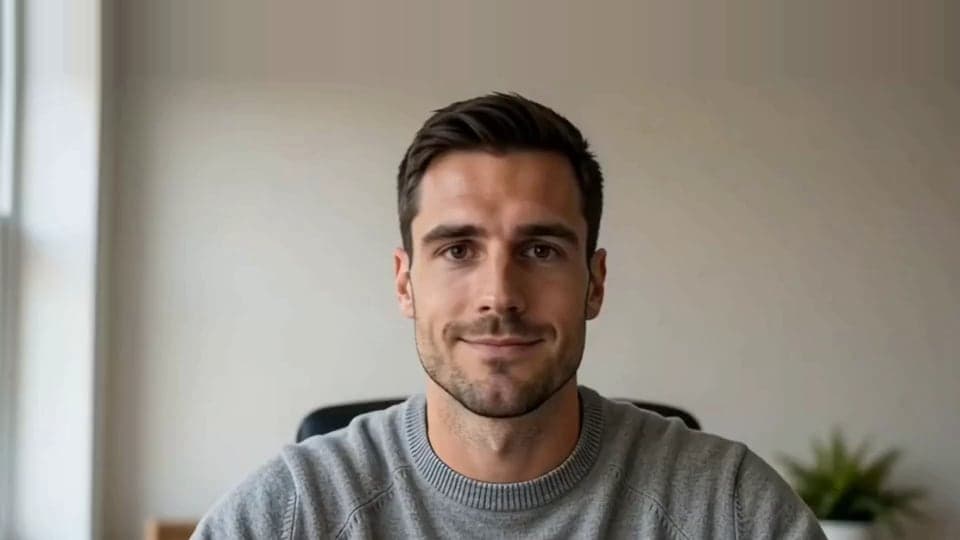
From our test
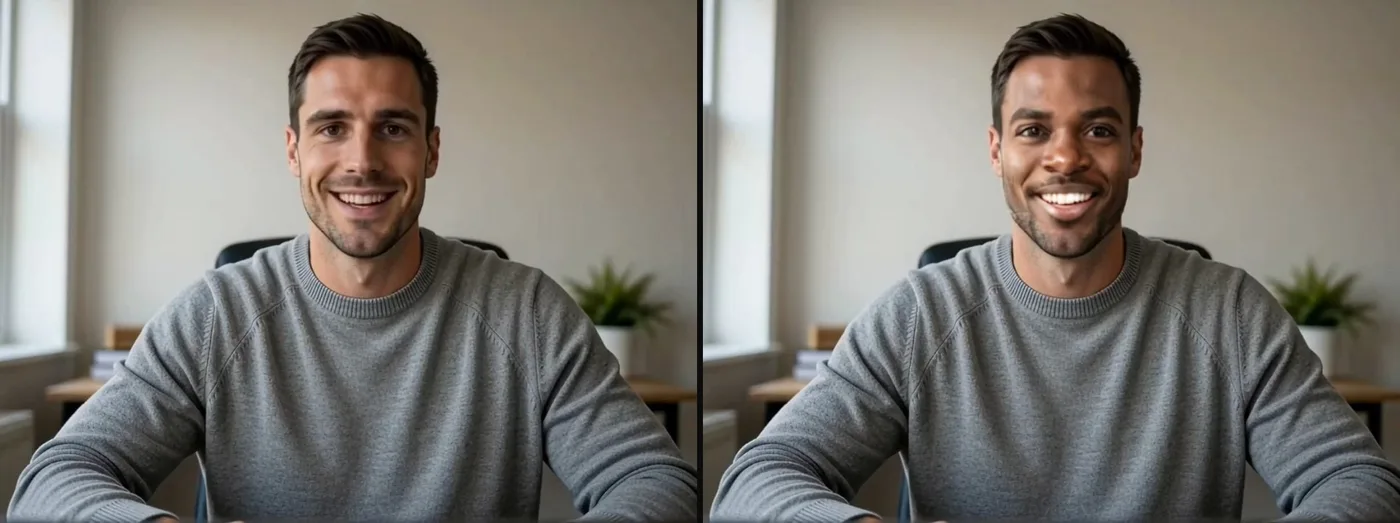
A live deepfake made with our Live Face Swap: the original webcam frame (left) and what the call saw (right). Both people are fictional.
Deepfake meaning
“Deepfake” covers any AI-made or AI-changed media that puts a real-looking person somewhere they weren't. In everyday use it means three things: a face swap (one face on another person), a fully generated video of a person, or a cloned voice. The face swap is by far the most common, and it's what deepfake makers, apps and generators produce.
- Face swap deepfake: one person's face on another person's body, in a photo, GIF or video.
- Live deepfake: the same swap done on a webcam in real time, so it can be used in a video call or stream.
- Voice deepfake: a voice clone that reads any text, or converts a recording, in someone's voice.
- Generated deepfake: a whole video of a person made by a video model from a photo and a prompt.
What we saw in our own deepfakes
| Output | What changed | What stayed the original's |
|---|---|---|
| Photo | Eyes, nose, mouth, skin of the face | White beard, hair, neck, hands, clothes |
| GIF | The face in every frame | Hair, timing and loop |
| Video | The face in every frame, with its expression | Hair, neck and the sound |
| Live webcam frame | The face, moving with the person | Hair, ears, stubble on the jaw, the room |
The pattern holds across all four: a face swap replaces the inner face and nothing around it. That's both why a good match looks real and why a bad match is easy to spot.
What deepfakes are used for
Most deepfakes are made for fun: memes, putting yourself in a movie scene, parody, VTubing and streaming as a character, or a new face on a video call with friends. Film and advertising use them to de-age actors and to localize videos.

Questions
What does deepfake mean?
A photo, video or voice made or changed with AI so a person appears to look, do or say something they didn't. The word comes from “deep learning” plus “fake”.
Is a face swap a deepfake?
Yes. An AI face swap is the most common kind of deepfake. Simple filters that stretch or paint over a face aren't, because they don't replace the person's identity.
Who invented deepfakes?
The term comes from a Reddit user called “deepfakes” who posted face-swapped videos in late 2017. The technology builds on years of research on neural networks that generate images.
Are deepfakes illegal?
Making one isn't illegal in itself in most places.
How can you tell if something is a deepfake?
Look at the edges of the face, the skin tone against the neck, the teeth and fast head turns, and check the file for AI metadata. Our guide to spotting a deepfake shows each tell on our own outputs.


Related
 How to Spot a DeepfakeWe make deepfakes, so here is where ours give themselves away, with close-ups.
 AI Face SwapSwap a face in a photo right here, or in a GIF, a short video or live on your video calls.
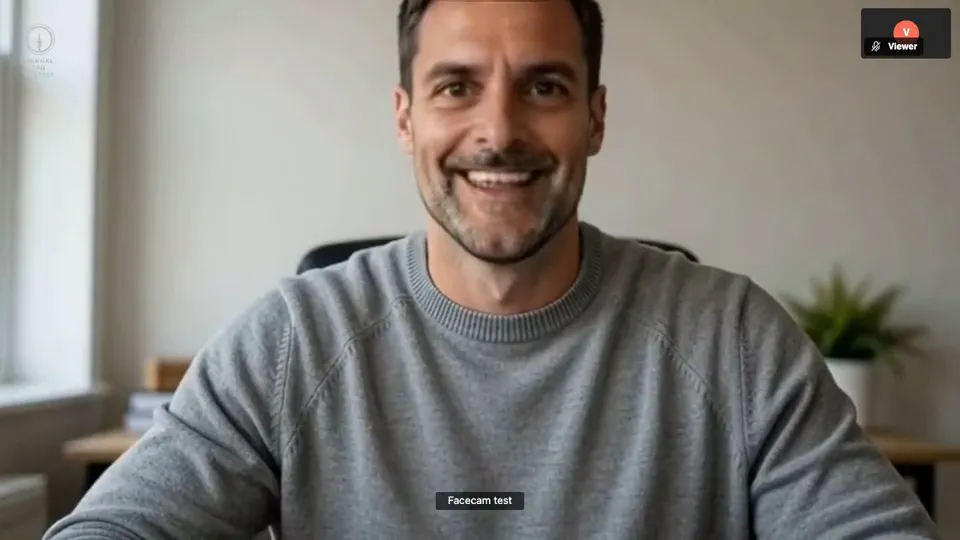 Live Face SwapLive face swap for Meet, Zoom and Discord: become anyone you want, in real time, while you talk. Upload any photo or pick a built-in face.
Live Face Swap
Be anyone on your calls
Start